What is scarification?
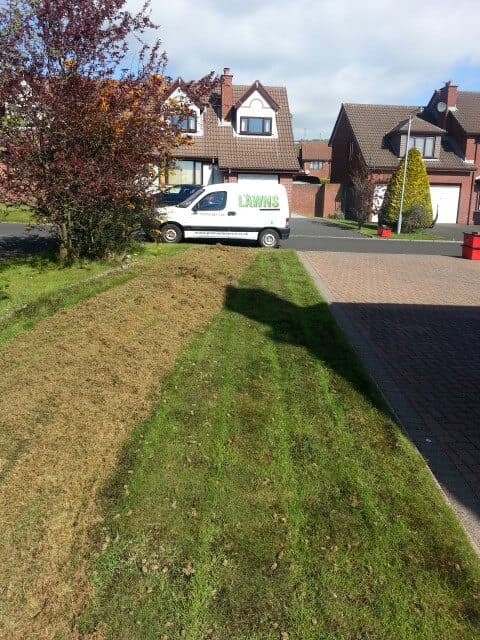
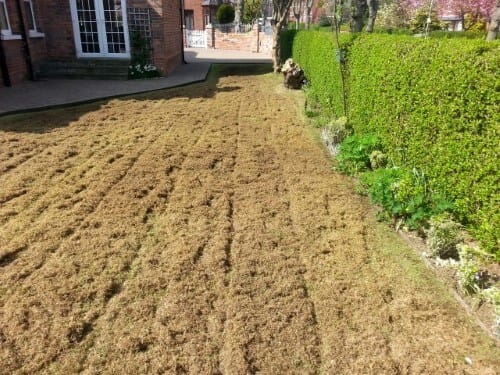
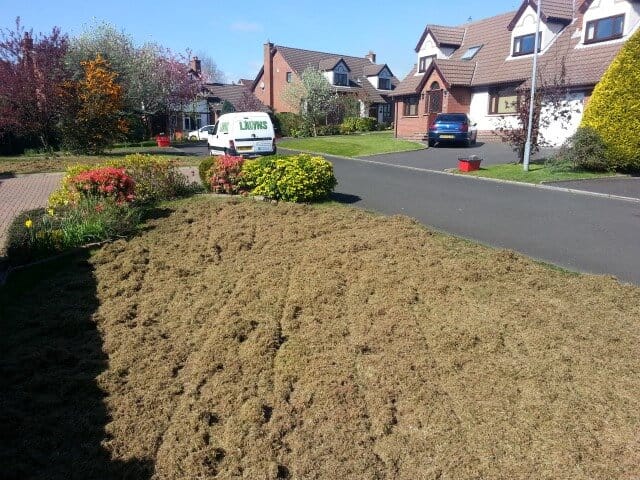
Scarifying is raking out the moss and thatch that build up at the base of a lawn. We do it with a machine that has blades to cut into the surface and pull it all out.
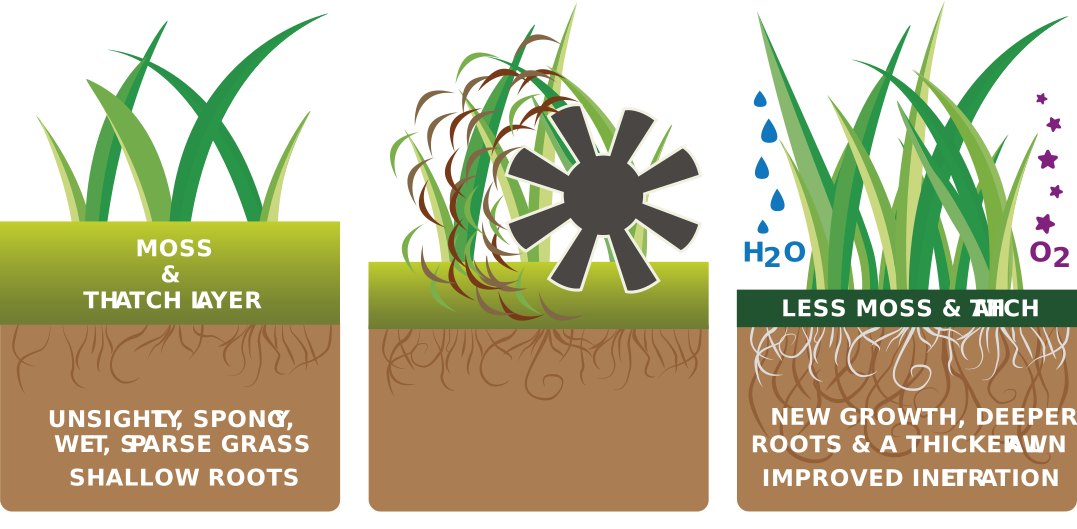
What is thatch?
Thatch is a layer of dead and living stems, roots and leaves that sits between the grass and the soil. When it gets thick, the lawn feels spongy underfoot and stays wet for longer.
A thick layer also stops water getting down into the soil. Feed gets stuck in it, so the roots stay shallow. Shallow roots mean a lawn that struggles in dry weather and is slow to recover from wear. Moss, weeds and disease all like those conditions too.
Why scarify?
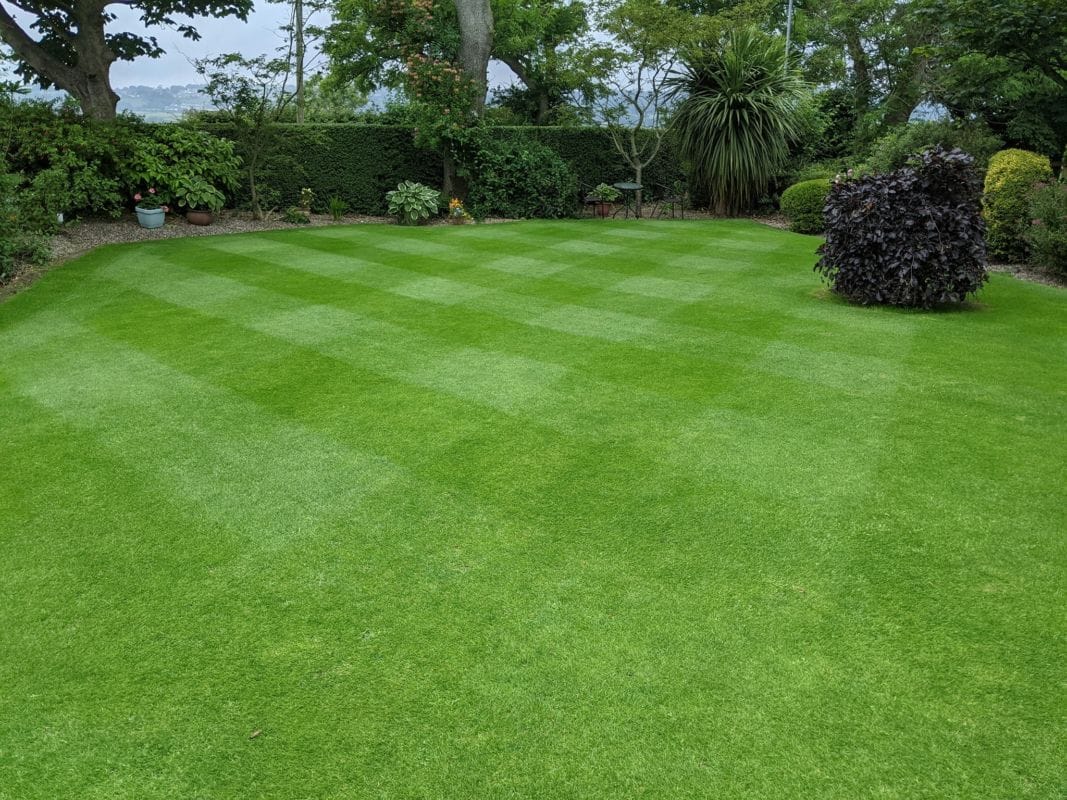
Taking the moss and thatch out lets air and water back into the soil. The grass thickens up and the lawn is easier to mow.
- Less moss
- Less thatch
- Water, feed and air get down to the roots
- Better drainage and less run-off
- A good seed bed if you’re overseeding afterwards
When should you do it?
Spring or autumn. Most lawns want it once a year. Lawns cut by a robot mower usually need it less often.
Can you do it yourself?
Yes. On a small lawn a rake will do it, but it’s hard going. For anything bigger you’ll want a machine. If you’re seeding or feeding, do it after the scarifying, not before.
We’ve a full guide on iGrow Carpet that walks you through it.
Read the scarifying guideWant us to do it?
We’d love to help everyone, but as a rule we only scarify lawns for clients on our treatment programme. For most of our lawns it’s part of the yearly maintenance, along with aeration.
See how our programme works