
We only deal with moss on lawns that are on our treatment programme. We don’t take it on as a one-off job.
Moss and Northern Ireland lawns
Moss is the number one problem for lawns here, and it’s what we get asked about more than anything else. Our mild, wet winters suit it down to the ground, and the heavy clay around Belfast holds water near the surface, which is exactly where moss wants it.
It moves into the gaps a weak lawn leaves behind and spreads from there. Left alone, a small patch can take over most of a lawn in two or three years.
Why does it keep coming back?
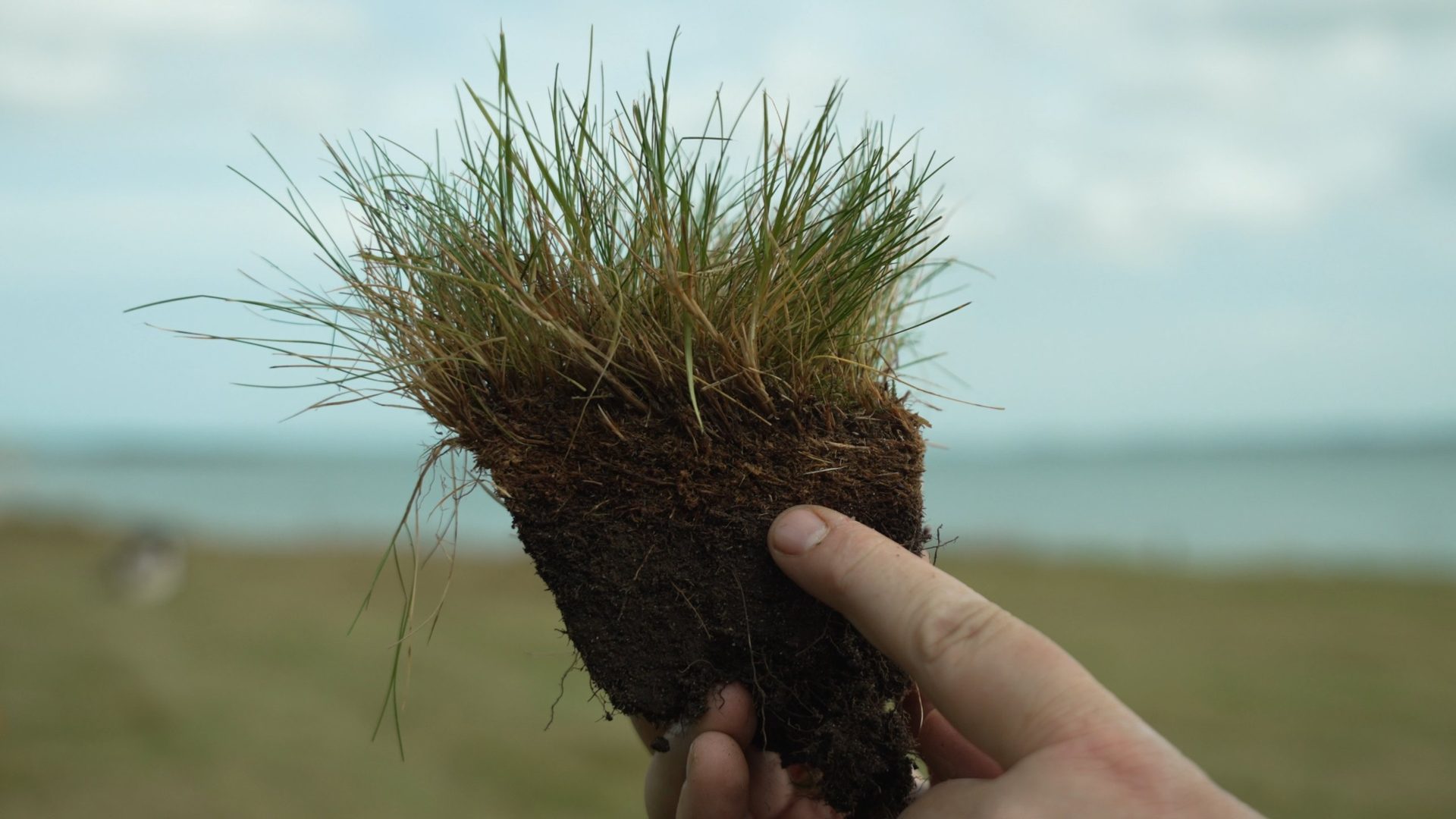
Moss isn’t like grass. It has no proper roots, just little anchors that hold it to the surface, and it soaks up water through its leaves. A lawn that stays wet on top is all it needs.
Its spores blow in from every garden round you, so there’s always more waiting for a gap.
What gives moss a way in?
- Shade from trees, hedges or the house, and poor air flow
- Compacted soil that stays wet after rain
- A thick layer of thatch, which holds water and moss spores
- Cutting too short, or letting the grass grow long and then scalping it
- A hungry lawn that’s short of feed
It’s always worse after a dry summer. The grass thins out in the drought, and when the damp comes back in the autumn the moss is quicker off the mark than the grass.
How we deal with moss
We’d love to tell you we can get rid of moss and it’ll never come back, but that isn’t the case. This is Northern Ireland, and it’s damp and wet a lot of the time.
So on the lawns we look after, we manage it. For most lawns, keeping moss under control comes down to the same few things, done every year.
- Cutting the lawn regularly, and never too short
- Aeration and scarification once a year
- Moss treatments and feeds through the year
- Seaweed, for feeding the soil, not just the lawn
The mowing is your side of it, and we look after the rest. Lawns cut by a robot mower usually need less scarifying and aeration.
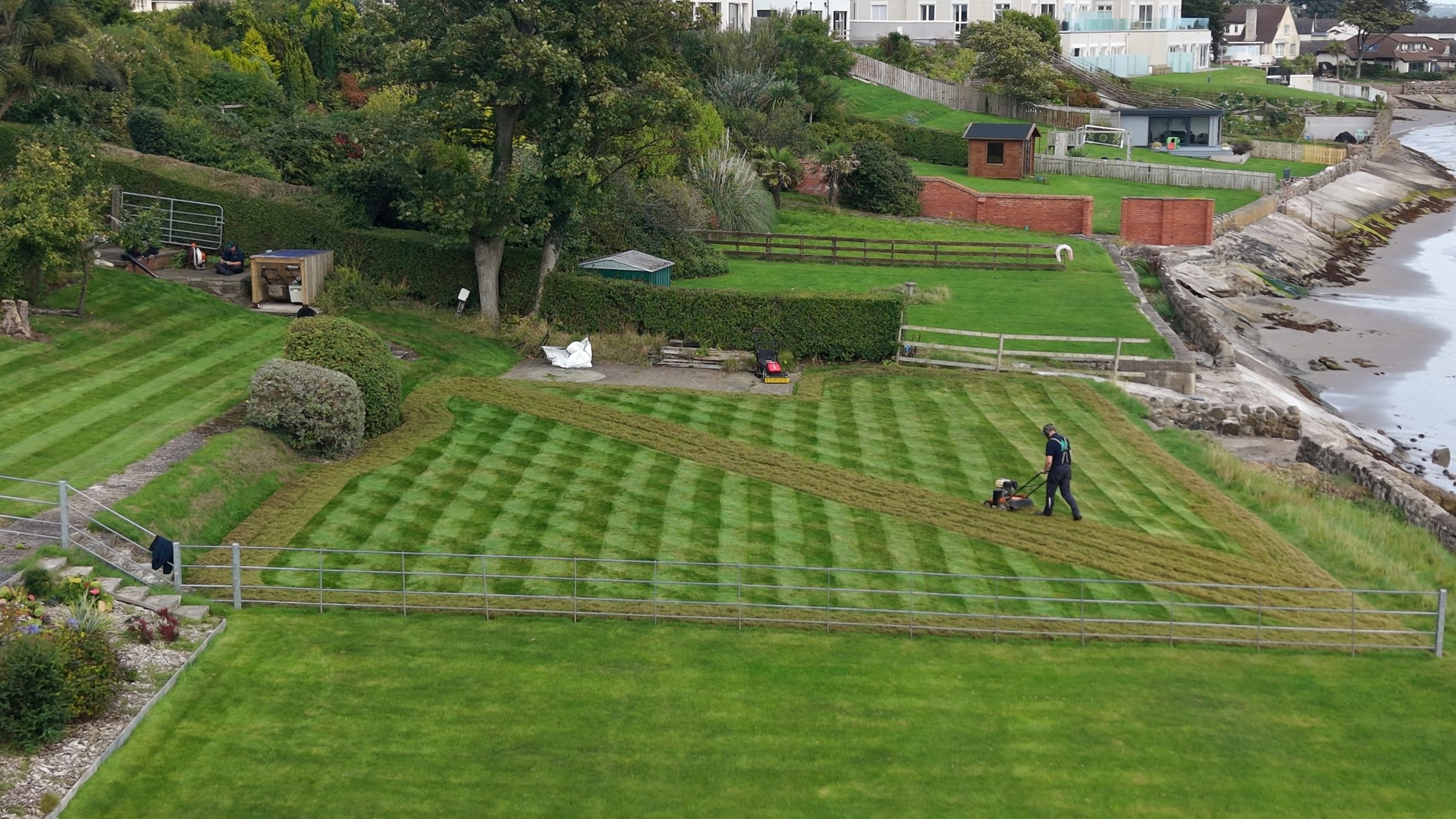
A lawn we look after in Greenisland
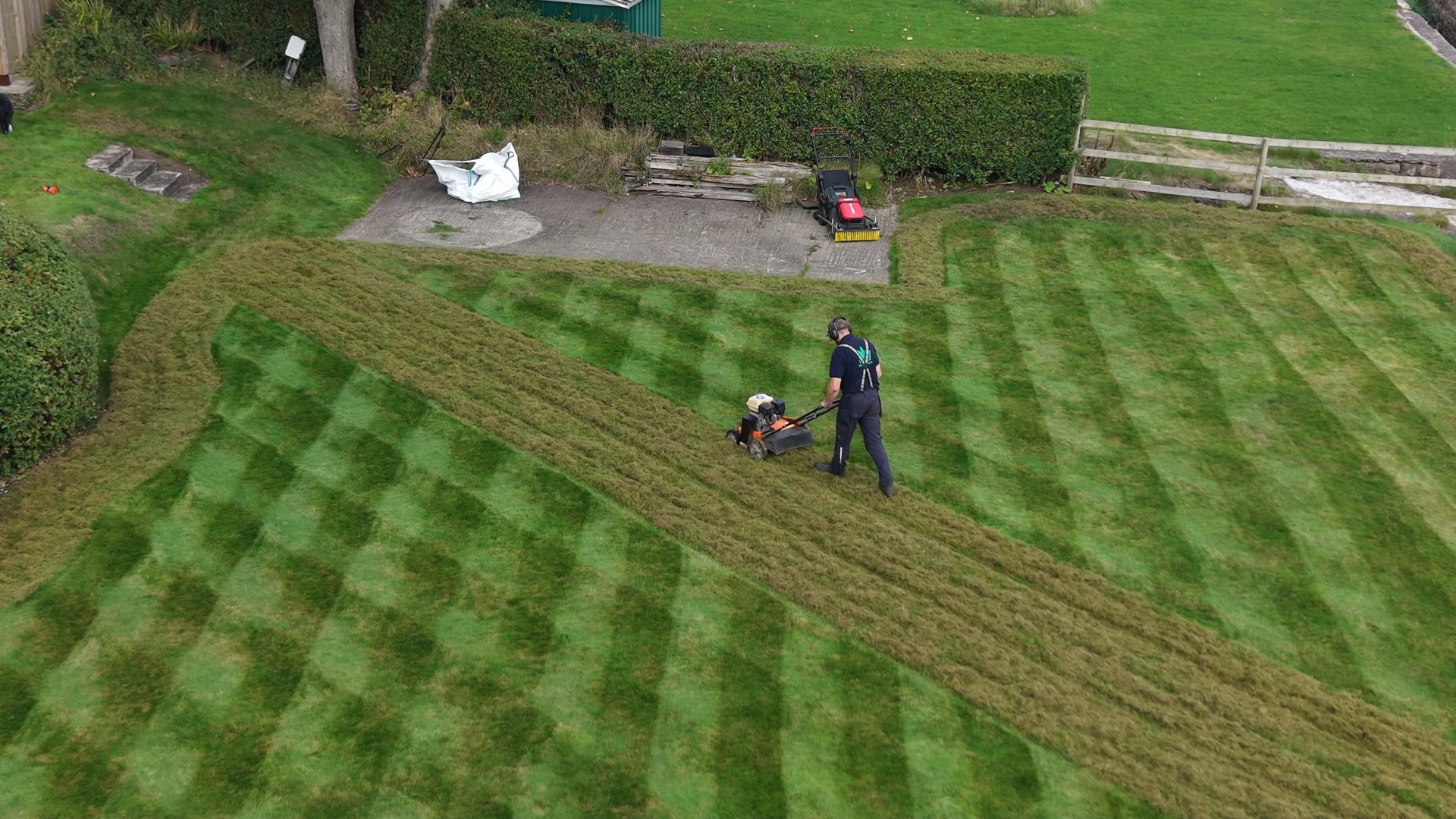
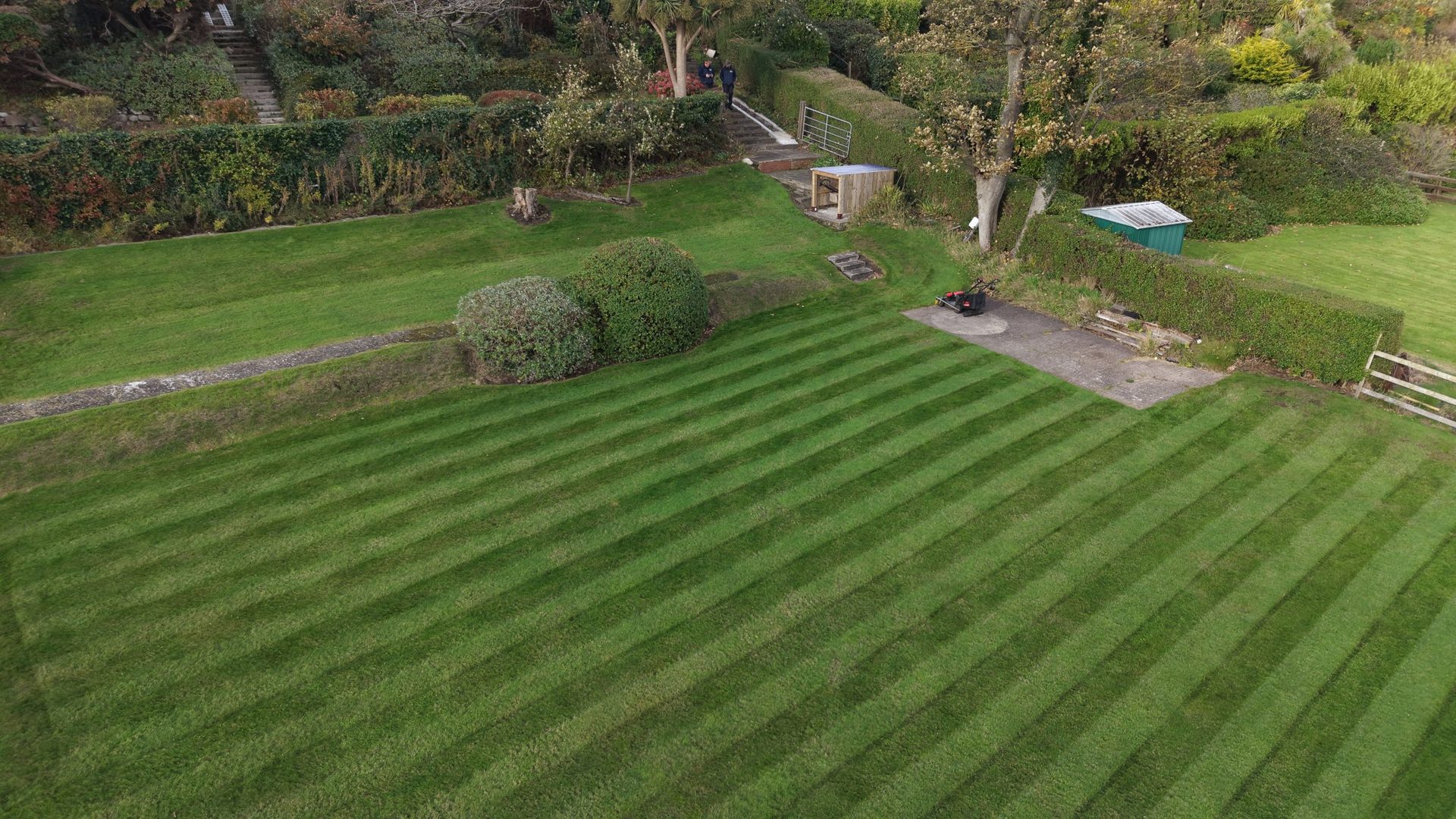
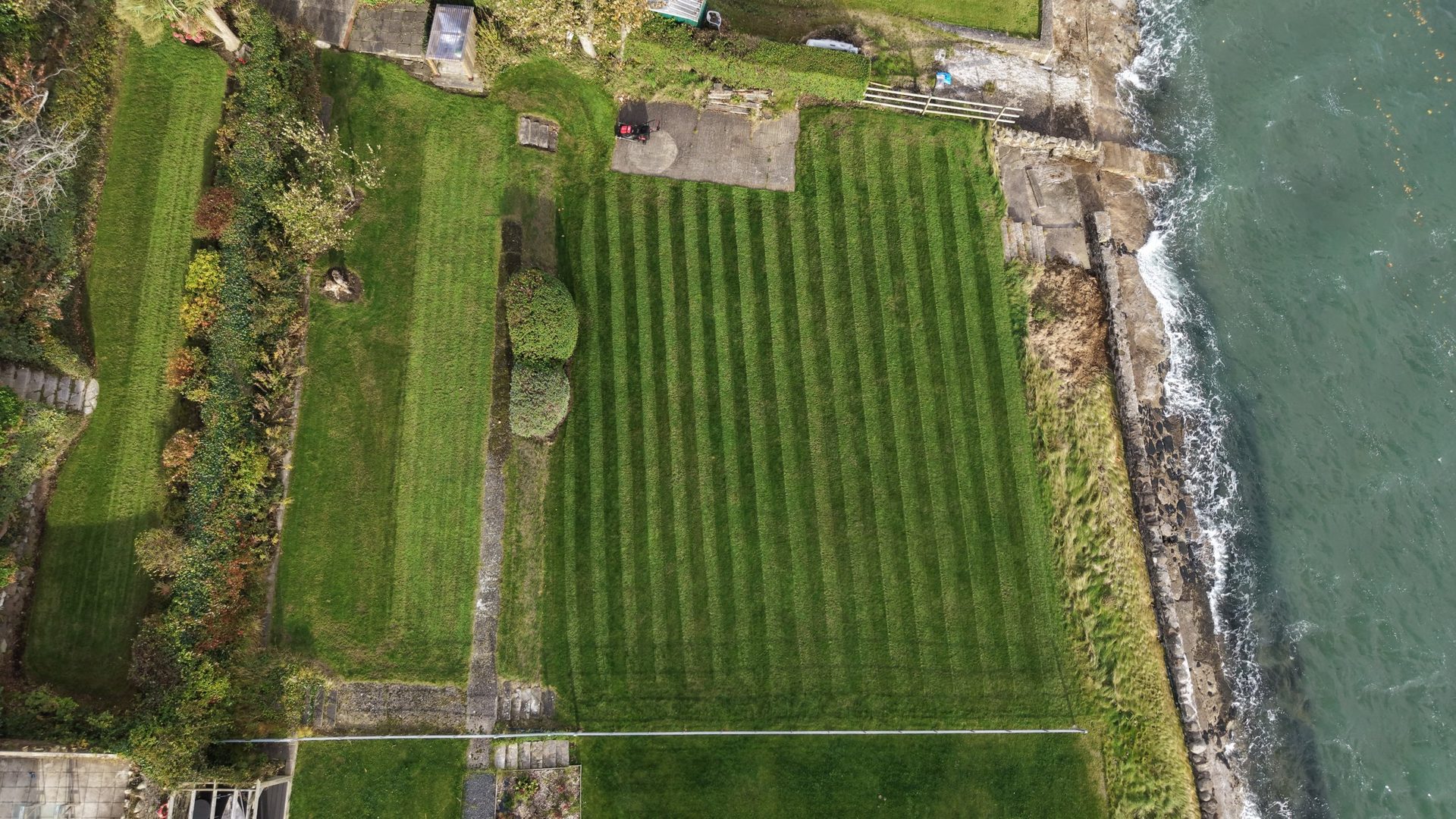
Good lawns need renovation work too, not just the bad ones. This lawn was scarified twice this year. Between you and us, the second one was for the camera, and we don’t think we’ve ever scarified a lawn twice in a year for a paying client. What every lawn does need is a renovation once a year, done at the right time of year and done the right way. Get that right and a lawn bounces back quickly. The photos above show this one about a month after it was scarified.
Good lawn care is about working with your lawn. That’s why we say we work in partnership with you to get the best results.
Below is the video of us carrying out the work on this lawn.
Why we’d normally never scarify a lawn twice in a year.
Why has the moss gone black?
That’s the moss dying off. It doesn’t disappear on its own. It gets cleared out the next time the lawn is scarified.
When does moss get dealt with?
Moss is easiest to see in late winter and spring, but the work goes on right through the year. The scarifying and aeration go in during spring or autumn, when the grass can recover quickly. After a drought, we wait until the lawn has greened up again before we scarify it.
What if the lawn is more moss than grass?
Some lawns have very little grass left to work with. Those get a lawn rejuvenation first, and once the new grass is in, the lawn moves onto our treatment programme.
Here are some other lawns we look after
When, why and how to scarify a lawn
Back to basics on scarifying, and how often a lawn needs it.
Clearing moss from a lawn in Holywood
Aerating, scarifying the moss out and feeding, with the best time of year to do it.
A bumpy lawn full of moss
An old, tired lawn that was uneven and full of moss, put right from start to finish.
Why your lawn feels spongy
The worst lawn on the street, spongy underfoot with a deep bed of thatch. Aerated first, then scarified to pull the moss and thatch out.
Our customers say
Malone Road, Belfast
Stranmillis, Belfast
Knock, Belfast
Could your lawn be one we look after?
We only take on a small number of new lawns each year, focusing on areas where we can provide a reliable, ongoing service.
Start by checking your postcode. If you're in our service area, tell us a little about your lawn and we'll take it from there.
1. Check your postcode
Pop it into the checker to see if you are on our route.
2. Submit your lawn details
Fill in the short form so we can review your garden.
3. We'll be in touch
We'll look at your details and get in touch if your lawn and location are a good fit for our service.
iGrow Carpet
If we don't cover your area or we're fully booked, have a look at iGrow Carpet. This is my own range of lawn care products, featuring a full free online learning hub, masterclasses, and tools to get the most from your lawn.